We’d been quietly hoping for the best, but we needn’t have bothered.
Thomas had spent the two-week wait for his MRI looking forward and throwing himself into a melange of physio work, ice, elevation and hitting the gym to work on the rest of him.
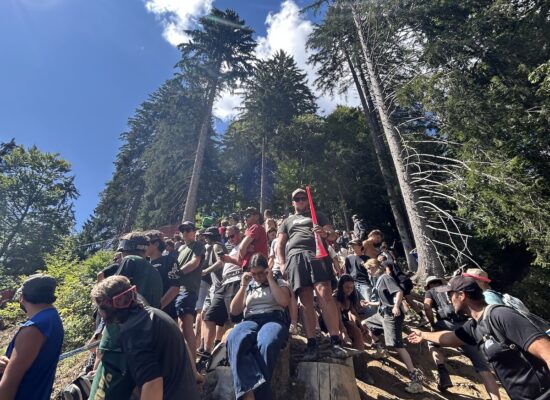
By the time the DH World Cup in Les Gets rolled around, he was feeling good and could actually walk pretty well without his crutches or any pain.
“Look at this. I think it might actually be alright, you know,” he’d say.
We’d booked in for an MRI on Monday, and for an appointment with a surgeon who specialises in ACL injuries in young athletes.
With fingers still firmly crossed, T and I set off for the MRI centre in Sallanches. It was nice to be rolling out of town together in the van again, even if it wasn’t for a fun race weekend and to explore somewhere new.
We handed the referral letter over at the MRI centre and completed the paperwork. Thomas was summoned a few minutes later and disappeared off through the middle door in a row of three.
He came back out a few minutes later and we waited for the report…
We stayed in the waiting room and read it in French. I took a photo and Google-translated it just to be sure. Then I pasted the French into ChatGPT for a third opinion.
Yep… Complete rupture of the ACL…
Shit.
We thanked the staff, left the building, and as he crutched back to the van, his eyes welled up. I put an arm around him and mine welled up too.
We’d done our research; we knew the implications.
We drove off in silence as it sank in and I gave him the odd pat on the leg while I made a beeline for Carrefour and sushi rolls to try and cheer us up.
They helped, as did time, and as the day went on, we perked up and started accepting the new reality and looking forward again.
The next day, Nina joined us for the five-hour round trip to Lyon. Three heads would be better than two when we met with the surgeon.
He was predictably calm, measured, suave and reassuring. He confirmed that surgery was definitely necessary and his specialist eye also spotted some meniscus damage on the MRI that would need attention.
He explained the procedure, the extra reinforcements and the considerations in relation to Thomas’s age and growth.
After surgery, he would need to do nothing at home for 3 weeks, then spend the next 3 back at school on crutches.
It’d be three months before he could swim or use an exercise bike.
It would be nine months before he could mountain bike gently.
And twelve until he’d be ready for downhill…
Twelve…
A year.
He’d already achieved the levels of movement and mobility required for surgery to go ahead straight away, which was terrific. And even better, there were spaces available in just 2 weeks.
We could get started right away.
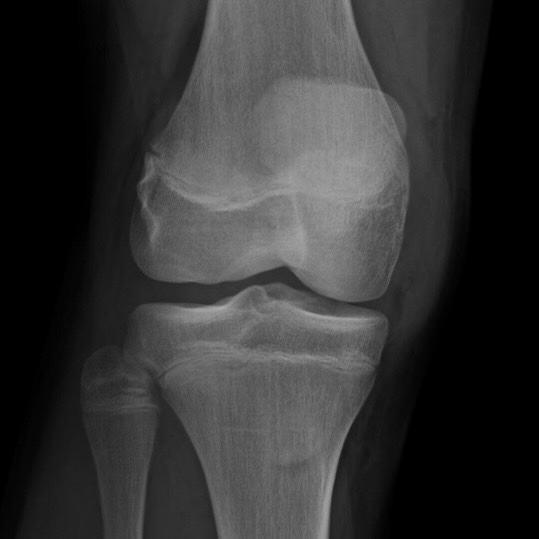
We snapped one up and triggered an avalanche of French admin, app downloads, account creation, permissions, anaesthesiologist appointments and more X-rays. We’d also need to square everything away with his new school and find out about specialist rehab centres.
We set off back through the rush-hour traffic feeling deflated but pleased with all the excellent help and advice he’d already received.
On the way home, and completely out of the blue, one of his mates’ dads rang. After finding out the latest, he said:
“Don’t worry. You will be back fitter and stronger than ever before after this. It might be a setback with your riding progress, but you will be much stronger physically and mentally.”
He’d done the same when he was young and had been on the French national ski team, so it was fortuitously well-timed and solid encouragement.
And I’m sure he’ll be right.
People are great. A big thanks to everyone who is and has been supportive.
The world is full of this. It’s a beautiful thing and much appreciated.